
The short answer
Munchwell’s Meta Ads ROAS rose from 1.06× to 6.5× in three months. New ads alone didn’t do it: we fixed the tracking, moved the audience to 24–40, tested three creative angles, smoothed the path to checkout and added 14-day retargeting.
- 1.06× meant ₹106 back for every ₹100 spent: a loss once product and delivery costs are paid.
- Tracking came first. Meta can’t optimise for purchases it never sees.
- The audience was the wrong age, and cheap clicks hid it.
- Only two of the six problems we found were in the ads themselves.
- 6.5×ROAS after three months, up from 1.06×
- ₹650Revenue for every ₹100 of ad spend, up from ₹106
- +513%Higher ROAS than where we started
ResultMeasured in Munchwell’s Meta Ads account over three months of campaigns, July to September 2026.
What is Munchwell, and where did its ads start?
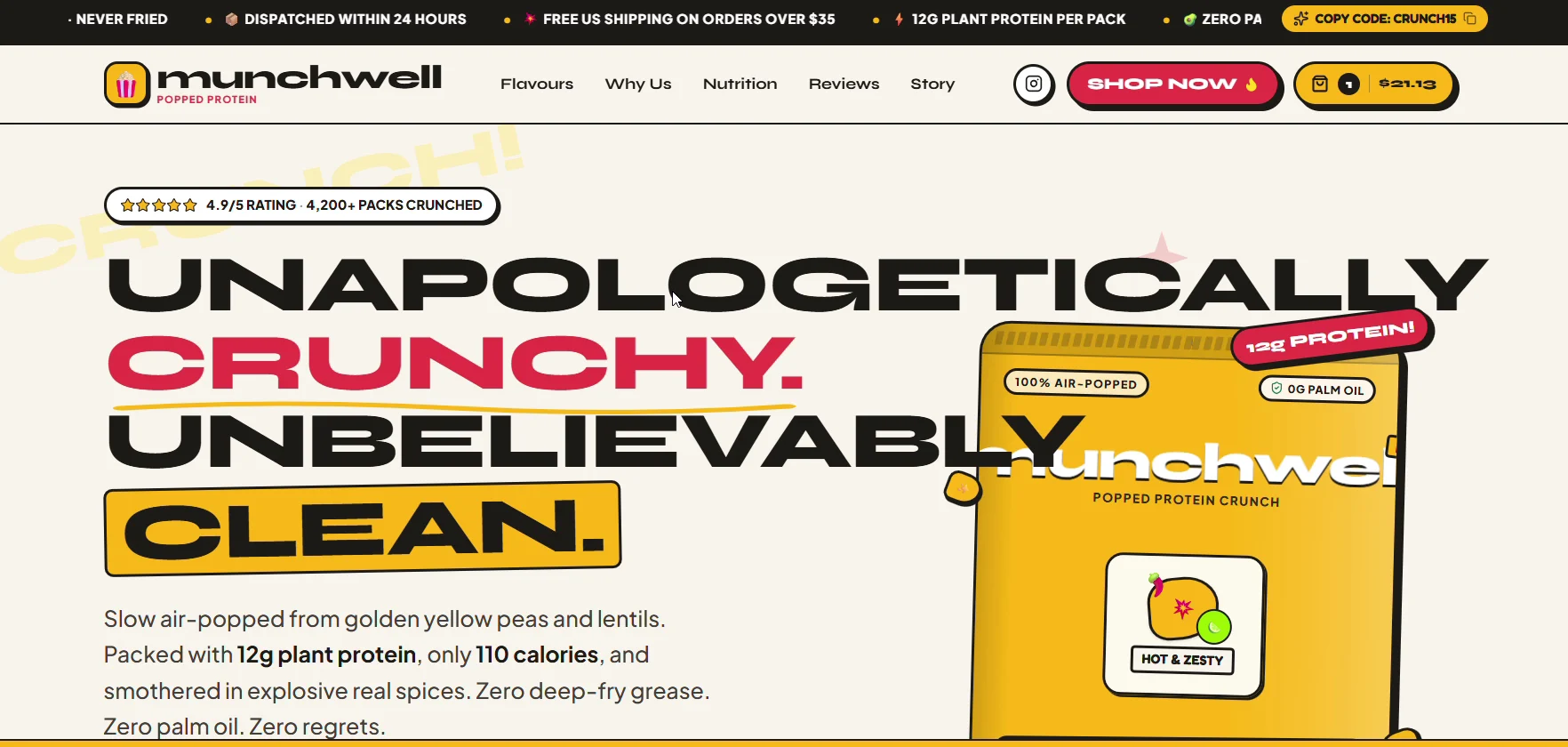
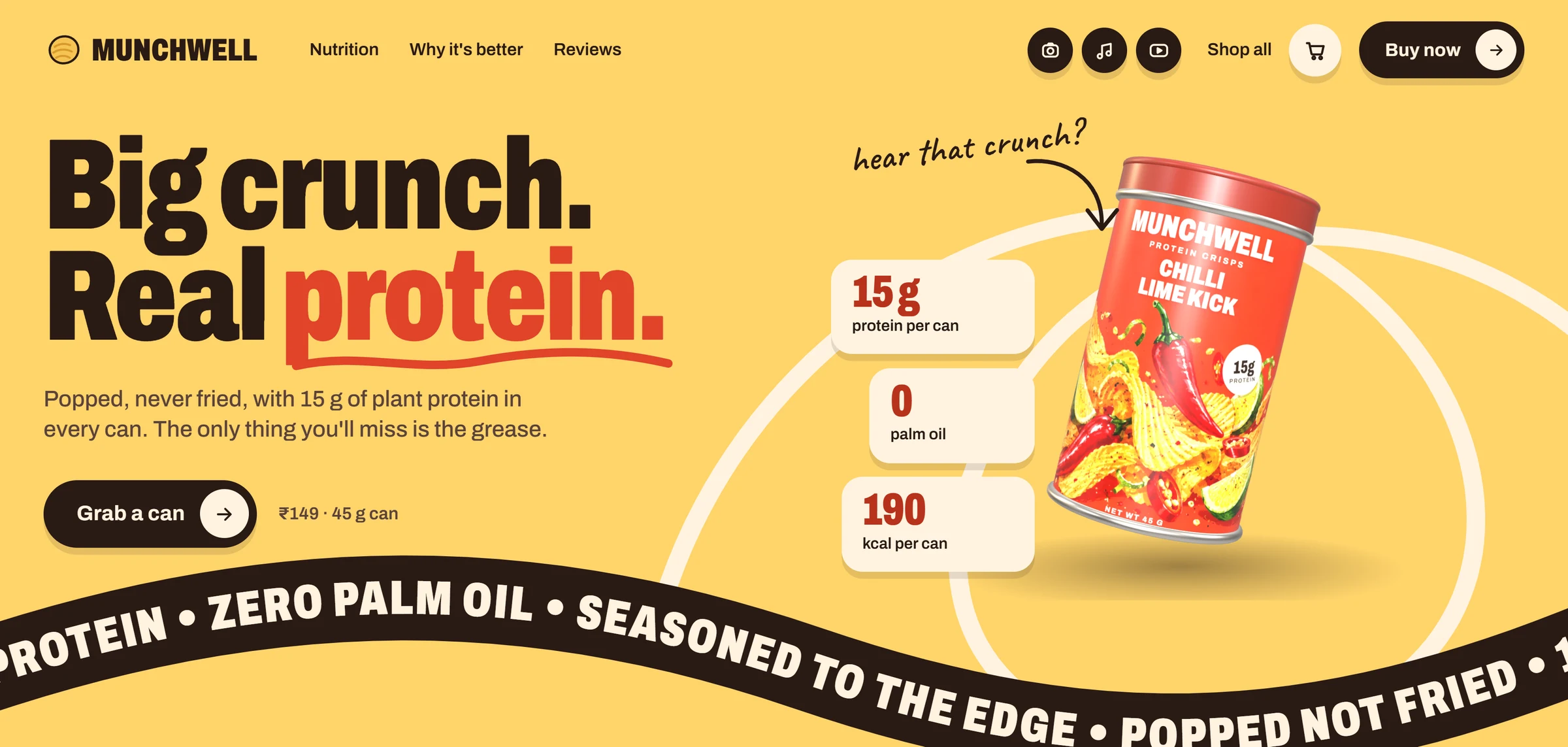
Munchwell is a protein-crisps brand that Scalevo Media built and runs as its own D2C store at munchwellsnack.com. Each 45 g can has 15 g of plant protein and 190 kcal, is popped not fried, has zero palm oil and costs ₹149, in three flavours: Chilli Lime Kick, Smoky BBQ and Sour Cream & Chive.
When we audited the account, Meta Ads were returning a ROAS of 1.06×: plenty of clicks, almost nothing left once the ads were paid for.
What does a 1.06× ROAS actually mean?
That sounds like a small profit. It isn’t: those ₹106 still have to cover the product, packaging, delivery, payment fees and any discount.
The yardstick is your break-even ROAS: 1 divided by your gross margin. With a 40% margin you need 2.5× just to break even (40% is an example, not Munchwell’s margin). At 1.06×, every order from an ad cost money.
Why was the ROAS stuck at 1.06×?
We audited the ad account, the Meta Pixel, the store and the follow-up, and found six problems. Only two were in the ads.
- 01
The wrong audience. Ads targeted 18–24-year-olds; our research pointed to an older buyer.
- 02
No creative testing. Similar ads ran with no structured test, so nobody knew which message sold.
- 03
Broken tracking. Purchases weren’t reliably reported back to Meta.
- 04
Thin product information. Protein, ingredients and the comparison with regular chips were hard to find.
- 05
No follow-up. No cart recovery or email, so anyone who didn’t buy first time was gone.
- 06
A shaky store. A broken support page and pages that took around three seconds to load.
Better ads would only have sent more traffic into the same leaky store, so we fixed the whole path, in order.
Why did we fix tracking before anything else?
Meta learns from the conversions it’s told about. Miss purchases and it optimises towards the wrong people, and every report you read is wrong too.
So the Meta Pixel came first: every key event, from viewing a product to completing a purchase, reported correctly. Only then could we judge audiences and creatives. Changes made on broken data are guesses.
Who should a protein snack brand target on Meta?
For Munchwell, the answer was 24 to 40, not 18 to 24. Younger audiences engage cheaply with snack content, but the promise (protein, popped not fried, no palm oil) matters most to people who already read labels.
The lesson travels: cheap clicks from the wrong audience can look healthy in Ads Manager and still produce no sales. Judge an audience on purchases, not clicks.
Which ad creatives did we test?
Instead of several look-alike ads, we tested three clearly different angles, each answering a different reason to buy.
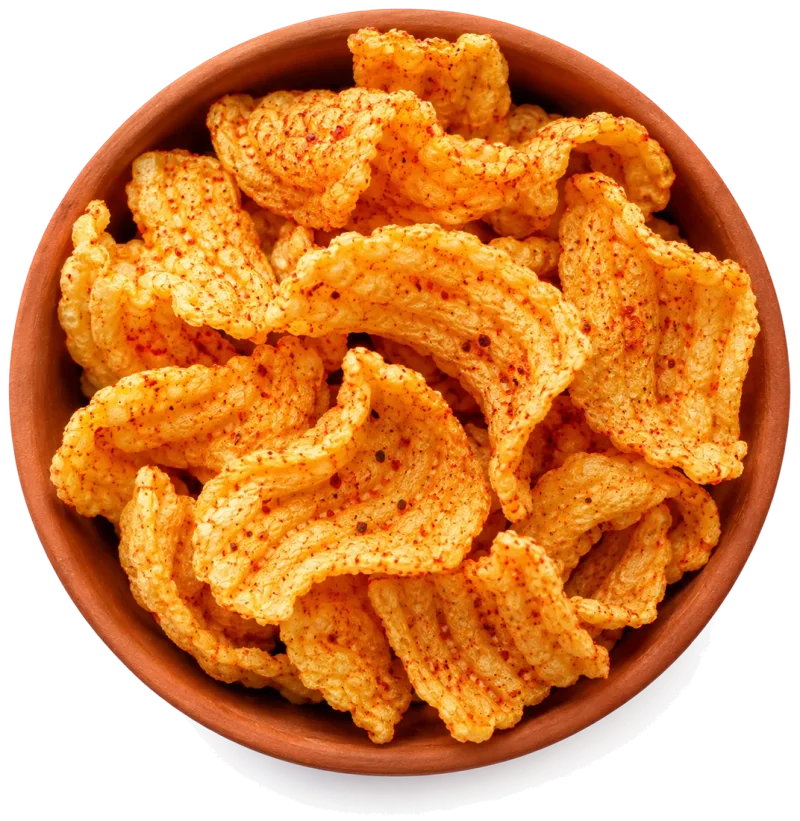
15 g of plant protein. Still tastes like a treat.
For label-readers who want a snack that does more.
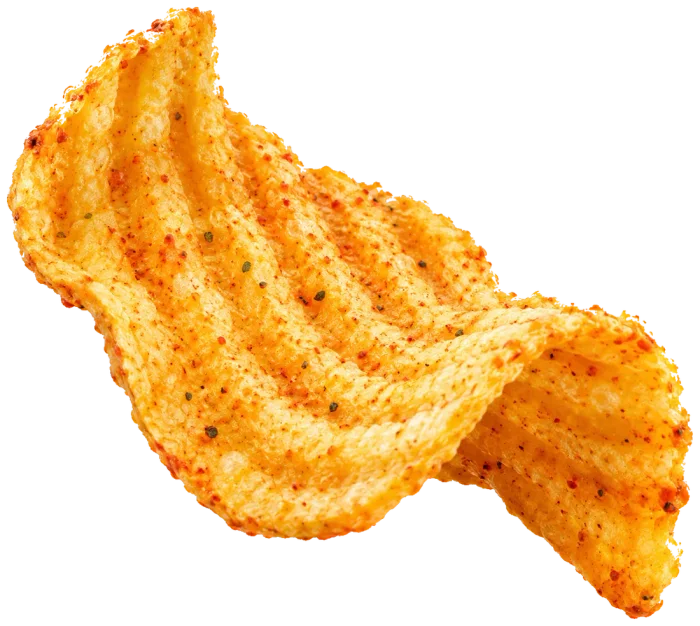
Popped, never fried.
For people who love crisps but not the grease.
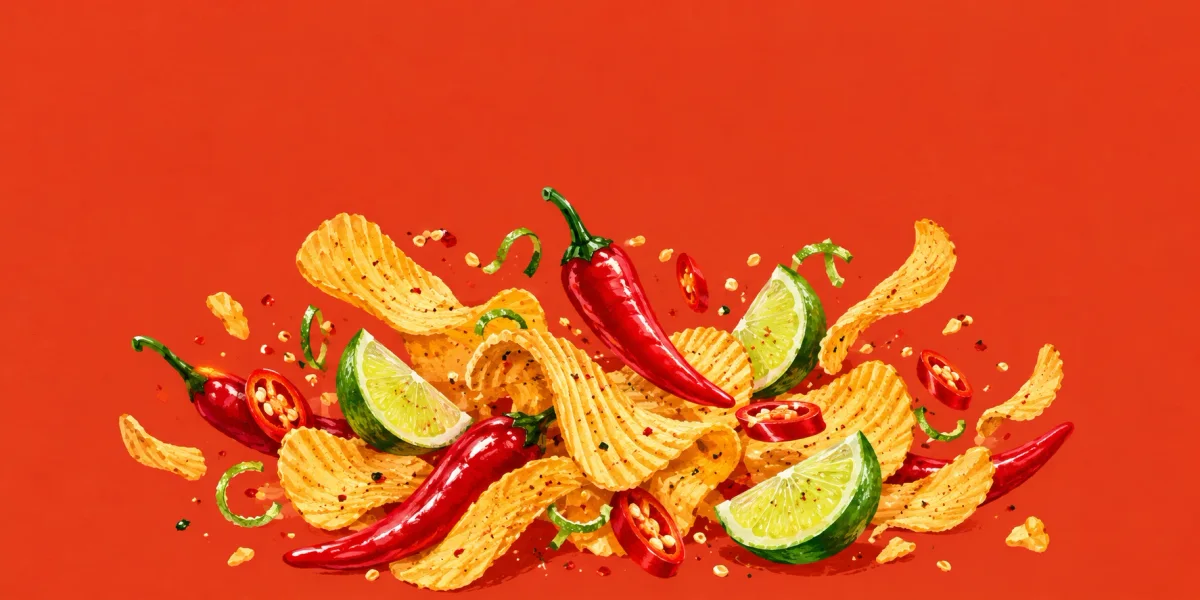
Pick your crunch.
For people who buy on taste first.
Reels of real snacking moments built awareness, the protein angle built interest, and retargeting with free delivery closed the sale.
How did we fix the path from ad to order?
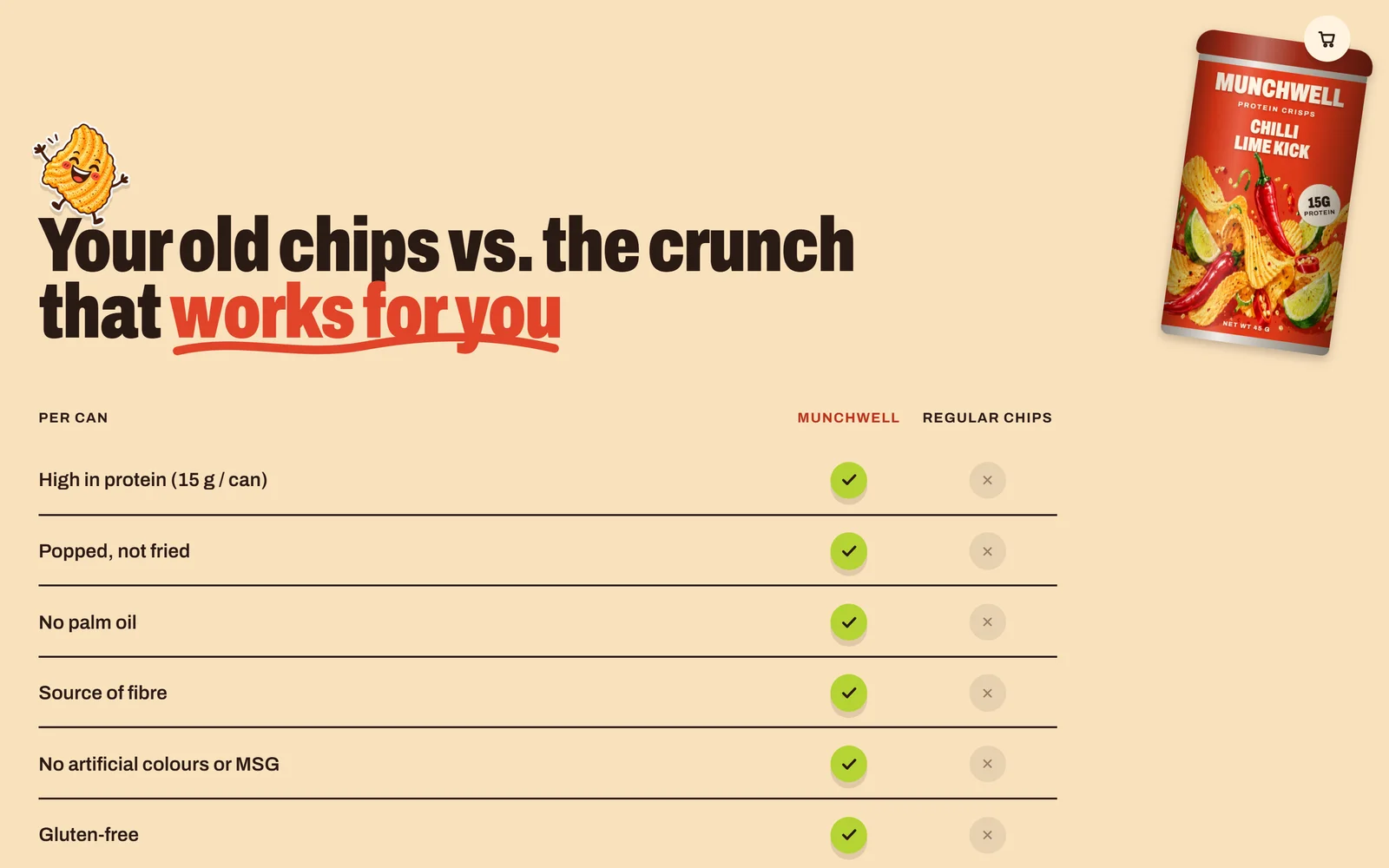
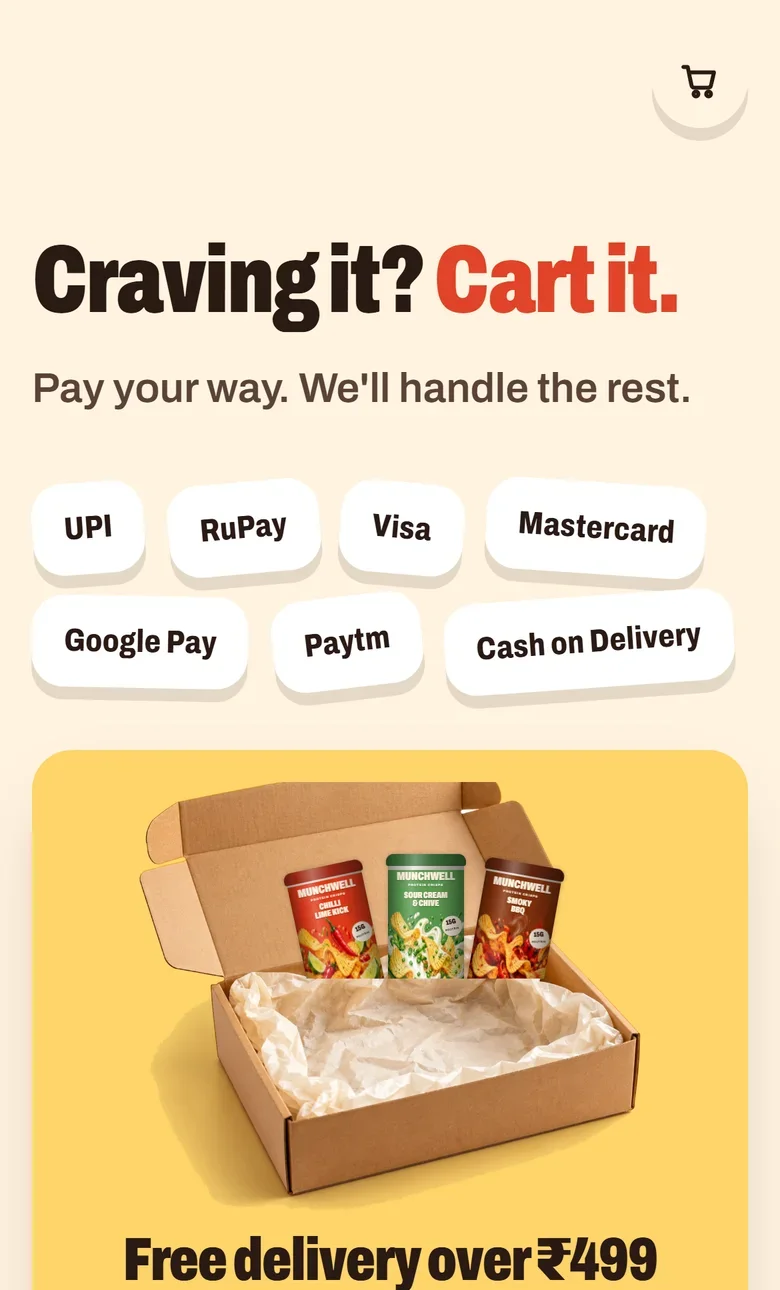
An ad only sells if the page it opens finishes the job. We rebuilt the store so the benefits, a flavour picker, nutrition details and a “versus” table against regular chips answer a buyer’s questions, with payment and delivery shown early.
- 01AdThe 24–40 audience, three tested angles, 14-day retargeting
- 02Product pageBenefits, nutrition and the flavour picker answer the questions
- 03CartPayment and delivery shown early; abandoned-cart recovery
- 04OrderTracked end to end by the Meta Pixel
How did retargeting and cart recovery help?
Few people buy from a new snack brand on the first visit. 14-day retargeting showed Munchwell again to people who viewed or carted a product, with free delivery as the nudge. Fourteen days suits a quick, low-cost purchase; a longer window mostly reaches people who have moved on.
Abandoned-cart recovery and email brought back the people who left something in the cart.
What changed after three months?
| Metric | Before | After three months |
|---|---|---|
| ROAS | 1.06× | 6.5× |
| Revenue per ₹100 of ad spend | ₹106 | ₹650 |
| Change in ROAS | — | +513% |
ResultMeasured in Munchwell’s Meta Ads account over three months of campaigns, July to September 2026.
In plain terms: the same ₹100 of ad spend now brings back about six times as much revenue. Profit after product costs, order value and repeat purchases will follow here once there’s enough data.
What can you copy for your own brand?
- Work out your break-even ROAS (1 ÷ gross margin) before judging any campaign.
- Fix Pixel tracking first, and check Meta’s purchases against real orders.
- Choose audiences by who buys, not who clicks.
- Test a few clearly different angles, not many similar ads.
- Add a short retargeting window and cart recovery.
Questions people ask
What is a good ROAS for a D2C snack brand?
One above your break-even point, which is 1 divided by your gross margin. With a 40% margin, break-even is 2.5×. Munchwell went from 1.06× to 6.5× in three months.
How long does it take to improve Meta Ads ROAS?
For Munchwell it took three months: tracking first, then the audience, creatives, store and retargeting.
Should I fix my website or my ads first?
Tracking first, then the biggest leak. In our audit only two of the six problems were in the ads.
What retargeting window works for snacks?
We used 14 days: snacks are a quick, low-cost decision. Pricier products usually need longer.