
The short answer
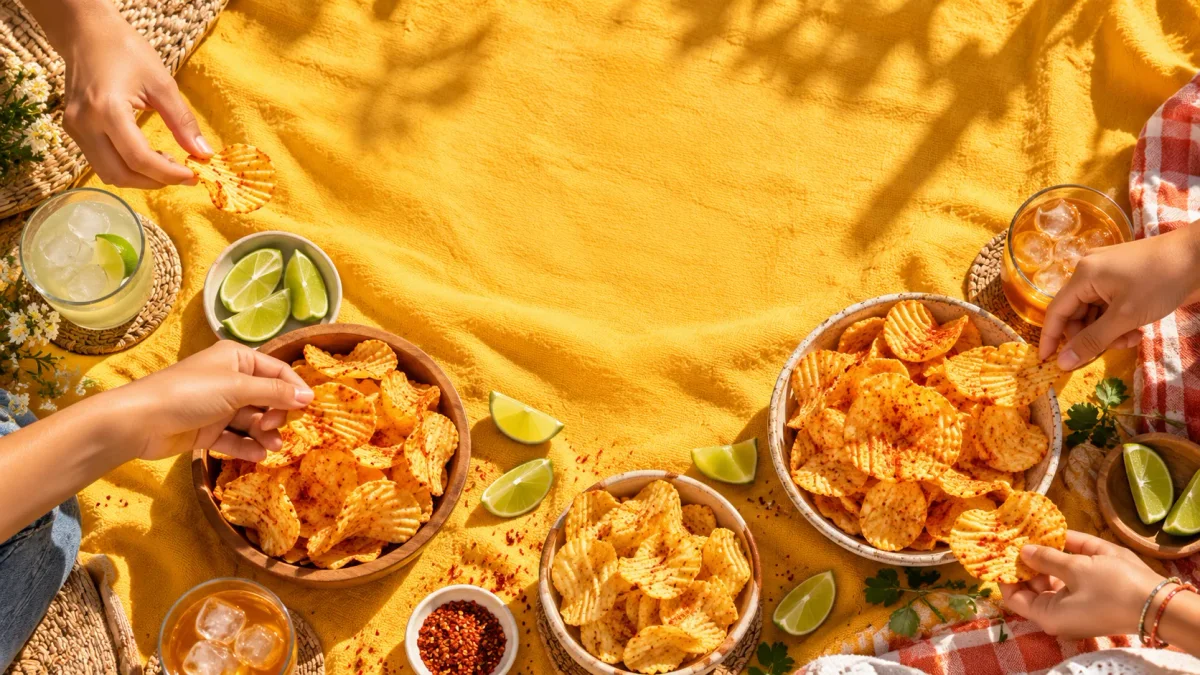
We turned Munchwell’s Instagram from irregular product photos into a content system. Every post fits a 60/30/10 mix: 60% product experience and lifestyle to make people crave it, 30% education to show why it’s different, and 10% creative experiments to find new angles, posted to a calendar in one visual style that matches the store.
- People buy snacks for moments, so the feed shows moments, not just packshots.
- Reels lead: a desk break, a movie night, a post-workout snack.
- Education gives a reason to choose it: protein, popped not fried, no palm oil.
- Instagram, the store and the ads share one look, so they feel like one brand.
- 60%Product experience & lifestyle: make people crave it
- 30%Education: show why it’s different
- 10%Experiments & trends: find new angles
The planMunchwell’s content mix: the share of posts given to each pillar.
What was wrong with Munchwell’s Instagram?
Munchwell is a protein-crisps brand: 15 g of plant protein in every can, popped rather than fried, with zero palm oil. Before the rebuild, its Instagram looked like a product catalogue that posted when someone remembered to.
- 01
Irregular posting. There was no content calendar, so posts came in bursts and then went quiet.
- 02
Product-only photos. Cans on plain backgrounds, with no real snacking moments to make anyone want one.
- 03
No consistent style. Each post looked different from the one before it.
- 04
No Reels. No short-form video at all.
- 05
Two brands in one. The Instagram and the store didn’t look or sound like the same brand.
- 06
Nothing to stop the scroll. No hook in the first second, and captions that didn’t say much.
What is a 60/30/10 content mix?
Make people crave Munchwell and imagine themselves eating it.
Taste tests, first reactions, crunch ASMR, flavour reviews, snack moments, lifestyle Reels and product photography.
Help people understand why Munchwell is different.
Protein benefits, popped vs fried, ingredient explainers, nutrition facts, comparisons and myth-busting posts.
Find new angles that could make the brand stand out.
Trending formats, new Reel styles and creative tests.
The split follows the job each kind of post does. Lifestyle posts create the craving; education gives people a reason to choose Munchwell over regular chips; a small share of experiments keeps the feed fresh and finds the next format worth doubling down on.
Which Reels do we make for a snack brand?
Reels lead the feed, and each one is a snacking moment people recognise from their own day:
Each Reel opens on the moment, not the logo, and the can arrives as part of the scene. That’s what makes them watchable as content and usable as ads.
Why should your Instagram look like your website?
Because people move between them. Someone who watches a Reel and taps through to munchwellsnack.com should feel they’ve arrived at the same place: the same chilli red and sunny yellow, the same condensed Archivo type with hand-written notes, the same loud, playful voice.
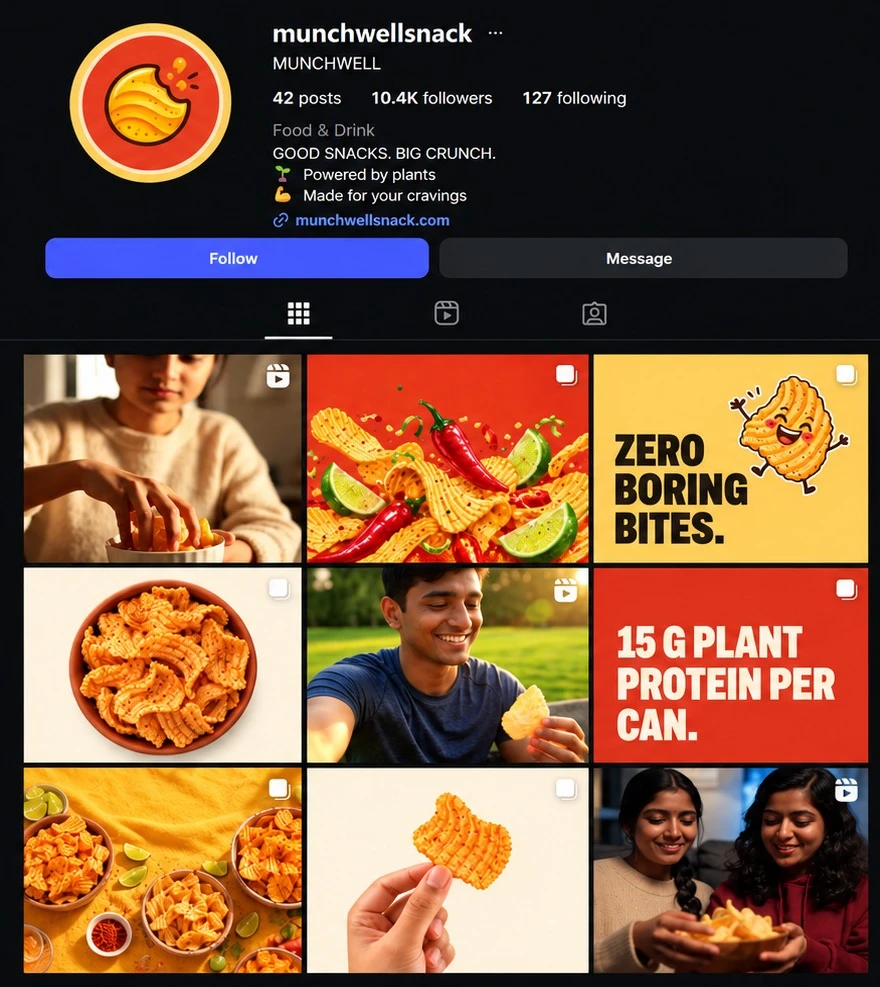
That consistency helps the ads too. Reels that already look like Munchwell make good ad creative, and the people who watch them become the warm audience for retargeting. We cover that side in how Munchwell’s Meta Ads went from 1.06× to 6.5× ROAS.
How do you write hooks and captions that stop the scroll?
Munchwell’s voice is built for it: short, loud lines like “Big crunch. Real protein.”, “Popped, never fried.” and “Zero boring bites.” The rules we write to:
- Open on the moment or the crunch, never on the logo.
- Put the reason to care in the first line of the caption.
- Use formats people comment on, save or share: taste tests, flavour reviews, popped-vs-fried comparisons.
- End with one clear next step, like picking a flavour.
How often should a snack brand post?
Consistency matters more than volume. We set up a content calendar and a steady posting rhythm, so the feed never goes quiet, and every post on it is tagged to one of the three pillars, which keeps the 60/30/10 balance honest.
Behind-the-scenes posts sit in the mix too. Showing how the brand works builds the trust a new snack needs before someone orders.
How will we know it’s working?
We track reach, engagement, saves and video views over fixed periods, with the source named, and we’ll add the numbers here once there’s enough data. Saves and shares are the ones we watch closest: they show a post was worth keeping, not just scrolling past.
What can you copy for your own brand?
- Pick three pillars and give each a share of your posts.
- Show the moment people buy for, not just the pack.
- Lead with Reels, and open on the moment, not the logo.
- Explain what makes you different, in plain words.
- Make your Instagram look and sound like your website.
- Post to a calendar, and tag every post to a pillar.
- Judge posts on saves, shares and views, not likes alone.
Questions people ask
What is the best content mix for a food brand on Instagram?
There’s no single answer, but most of the feed should make people want the product. Munchwell uses 60% product experience and lifestyle, 30% education and 10% creative experiments and trends.
Should a snack brand post Reels or photos?
Both, but lead with Reels. Short videos of real snacking moments (a desk break, a movie night, a post-workout snack) show the product the way people actually eat it.
How often should a small brand post on Instagram?
As often as you can keep up every week. A steady, planned rhythm beats bursts followed by silence, which is why Munchwell posts to a content calendar.
How does Instagram content help Meta Ads?
Good organic content becomes ad creative, and the people who watch it become a warm audience to retarget. Munchwell’s Reels of snacking moments feed the awareness stage of its ads.